Four typical buyers. The door is wider than the list.
The CEO with real money on the tableSeven figures of AI spend is proposed, and the plan underneath it is a slide.
The CFO refereeing budget bidsEvery function wants AI money. Someone has to rank the bids against each other.
The board that will challenge itThe spend gets questioned in the room. The allocation has to survive the questioning.
The PE operating partnerA hold period is an allocation horizon. The AI dollars have to map to the exit thesis.
You get six things back.
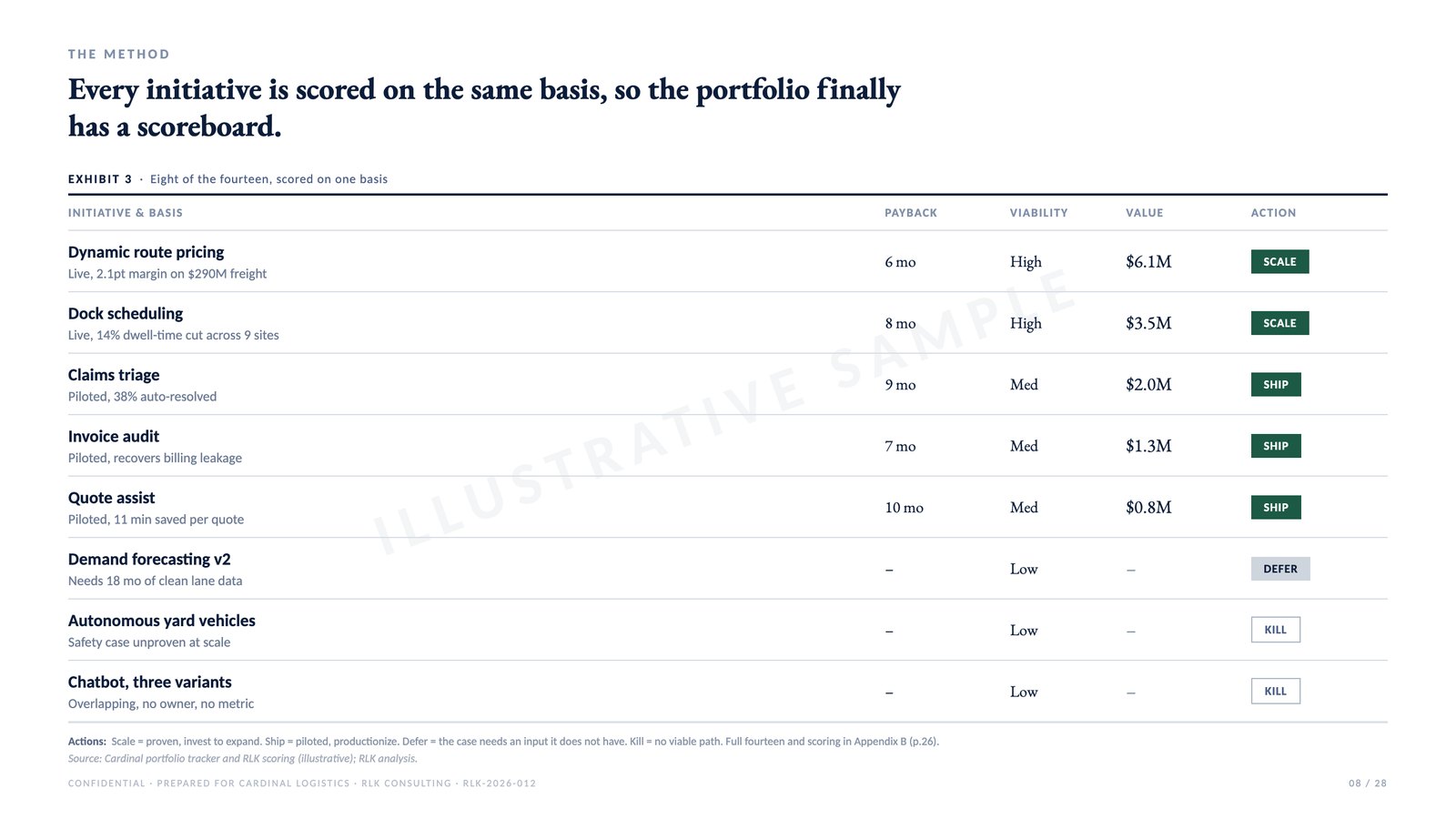
The portfolio scorecardEvery active AI initiative on one page. Payback, viability, execution distance, and a recommended action: kill, ship, scale, defer. The count in each column is the most informative part.
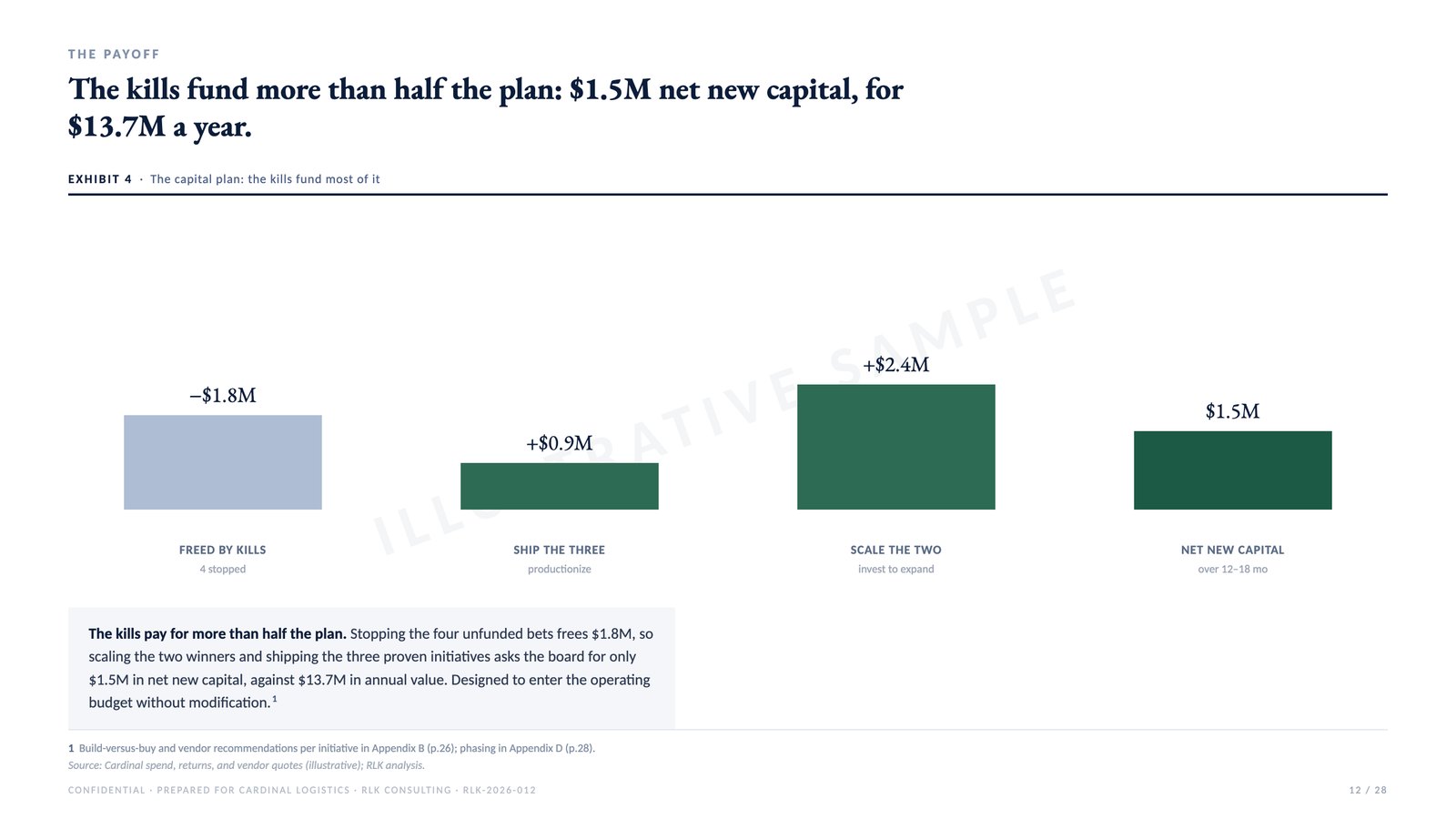
The capital planA sequenced 12 to 18 month allocation of AI investment dollars across initiatives, with build-versus-buy and vendor recommendations. Designed to enter your operating budget without modification.
The board pageThree exposures on one page: operating, competitive, attestation. Each carries a status, an owner, and the one question the board should ask this quarter. It replaces the 30-slide AI section in most board packs.
The competitor AI readWhat competitors and comparable companies are spending on AI, what return they are seeing, and where their bets have not paid off. The allocation is built against the competitive picture, not just internal priorities.
The governance memoWho decides what, on what cadence, with what evidence. Most AI programs run without one, which makes this the cleanest single intervention available.
The follow-on scopeWhen the work points to a full implementation engagement, the scope, budget, and timing recommendation are written into the deck. You decide whether to engage.
You send six things.
The AI portfolio in flightEvery pilot, tool, and proposal on the table, what it costs, and what stage it is at, so the decision covers the whole board, not the loudest project.
The numbers behind each moveThe cost and the expected return for each initiative, however rough, so I can weigh them on the same basis.
The capital availableThe budget and the time horizon for AI investment, so the allocation fits what you can actually fund.
Who owns each initiativeThe sponsors and teams behind the work, so the plan assigns accountability alongside the dollars.
The board mandateWhat the board has asked for and what they will fund, so the allocation is one you can defend in the room.
The workflow mapYour most time-intensive workflows and their readiness for AI intervention, so the capital plan covers the full landscape and nothing gets missed because a pilot was already running somewhere else.
Three pages from the deck.
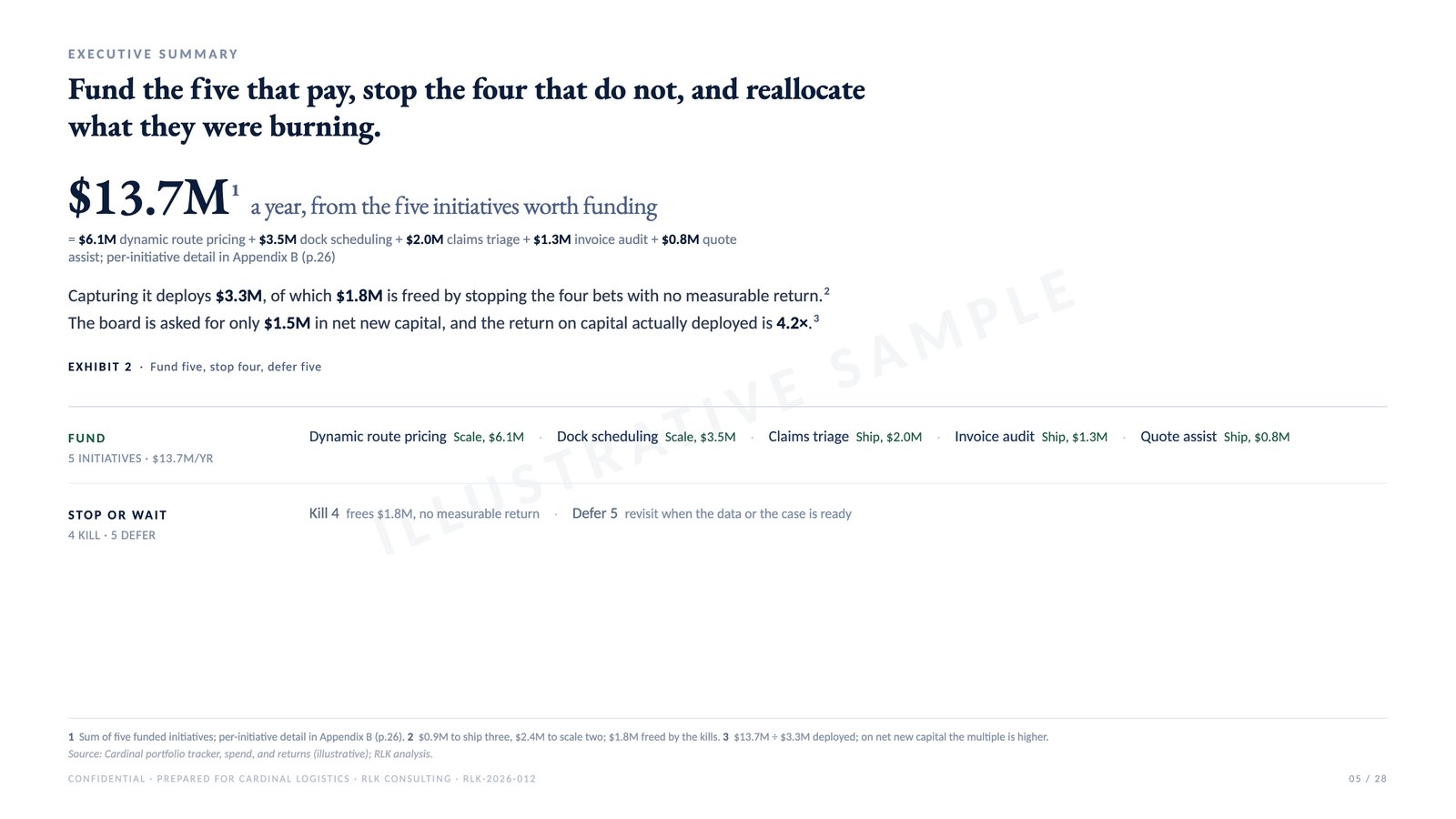
01The verdict02The portfolio scorecard03The capital plan
Illustrative sample. Cardinal Logistics is a fictional company and every figure is dummy data. Full example deliverables are available upon request.
Put a number on the AI spend, and defend it to the board.
A scored portfolio, a sequenced capital plan, and a one-page board view, all built from your own numbers. It starts with a free 30-minute scoping call.