Board Readiness and Performance Analytics
Give your board the technology story they can hold you to, on one page.
Two to three weeks to the technology scorecard your board actually reads.
Book a scoping call →
Fortune 500 rigor, sized for the middle market.
From $25K
scoped and agreed at signing
2–3 wks
from kickoff to the board-facing scorecard
1 page
in place of the forty-slide technology deck
Who typically buys this.
Four typical buyers. The door is wider than the list.
The CIO with a skeptical boardThe technology story is real. The current reporting is where it goes to hide.
The CEO asked what IT costsA director wants the number and the trend, and the answer should fit on a page.
The company heading into diligenceBuyers will grade the technology function. Better they grade a scorecard you built.
The new CIO setting a baselineFirst quarter in the seat. Choose the metrics you want to be held to.
You get four things back.
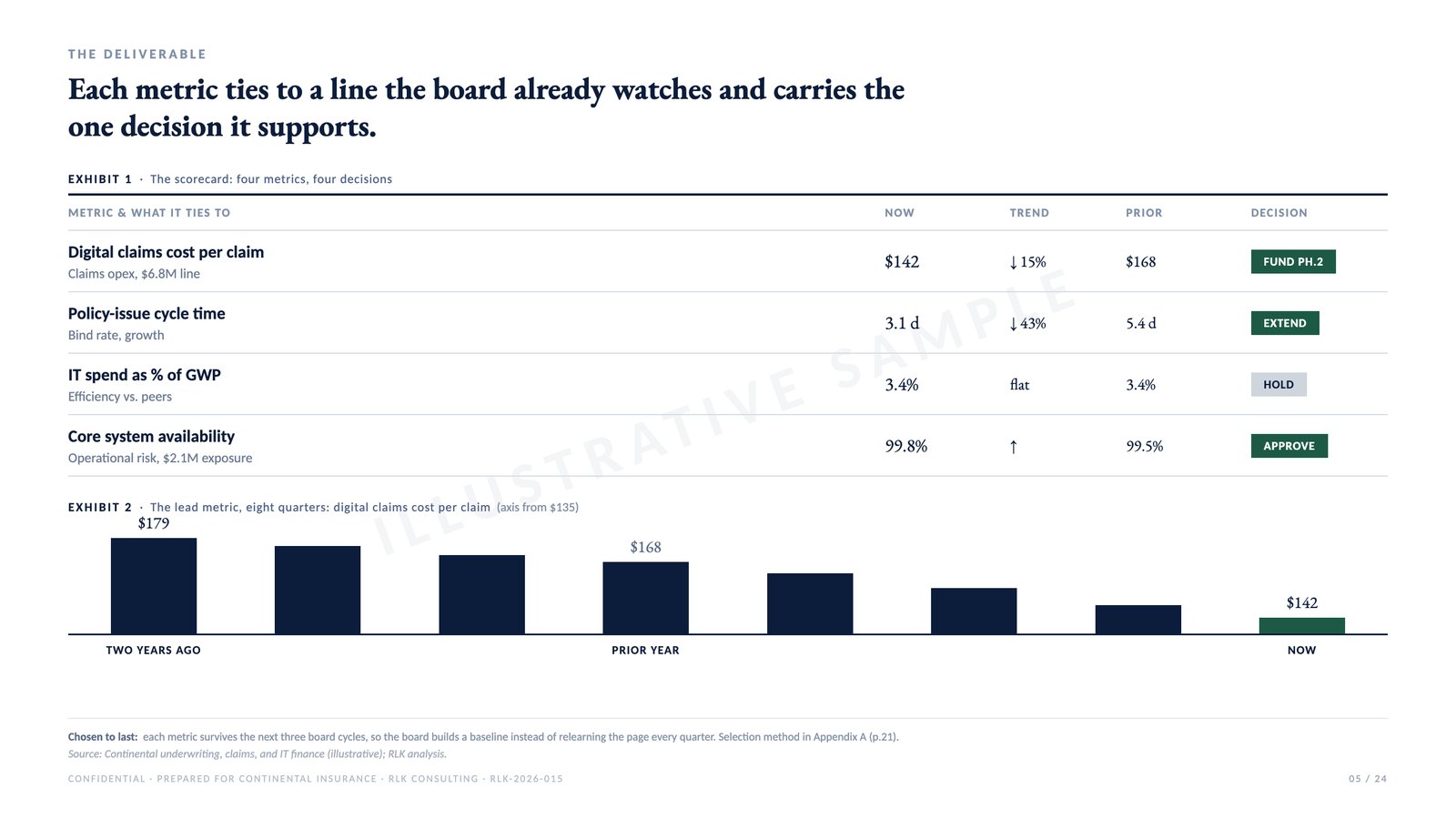
The scorecardThree to five operating metrics selected for their tie to financial outcomes, each carrying a current value, a trend, and the decision the board is being asked to support. The architecture is the deliverable. The metrics are chosen to survive the next three board cycles, not just this one.
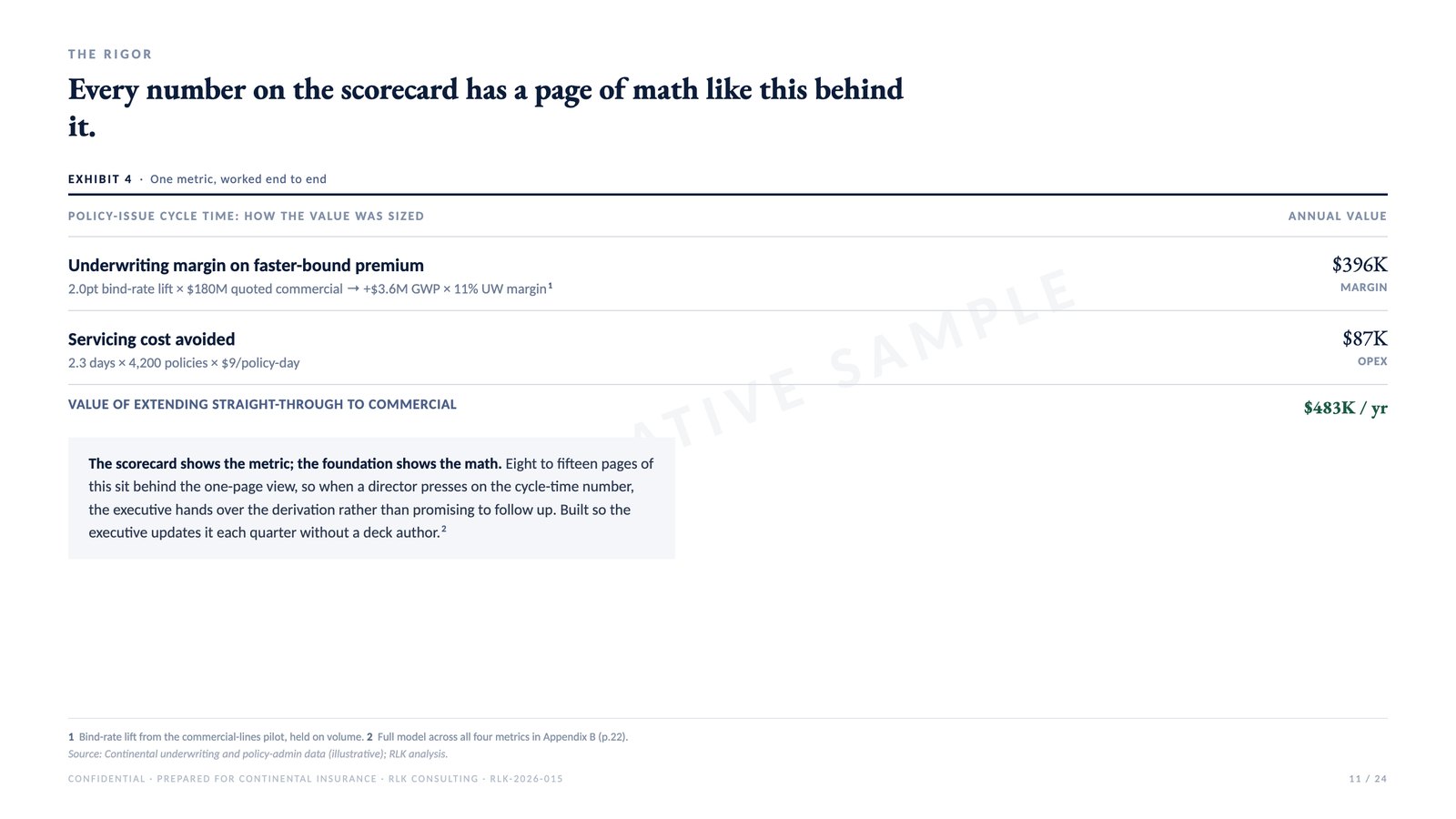
The analytical foundationEight to fifteen pages of financial math, sensitivity analysis, and sourcing notes the executive can hand to the board chair or finance committee. Built so the executive updates it directly each quarter, without a deck author.
The strategic narrativeThe argument the executive speaks from when walking the scorecard. Two to three pages, written in their own voice, structured to lead with the decision and end with the ask.
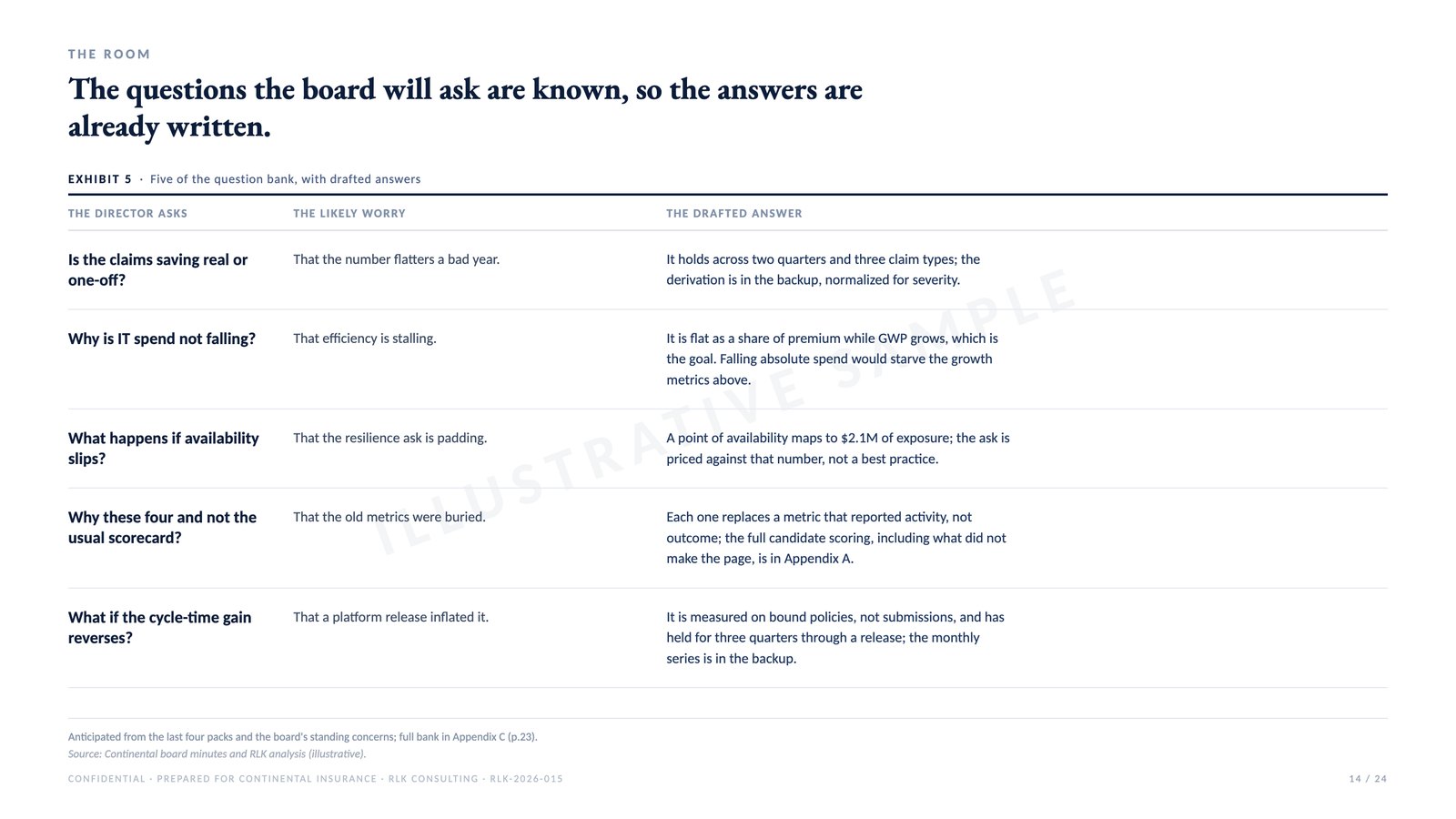
Director questions, anticipatedThe eight to ten questions the board is most likely to ask about the technology position, with a drafted answer grounded in the same math as the scorecard.
You send five things.
The technology portfolioWhat you run, what it costs, and what it is supposed to deliver, so the story is grounded in the estate you actually own.
The metrics you report todayWhatever you currently put in front of the board, so I can see the gap between what you track and what they need to see.
The board contextWhat the board has been told before, what worries them, and the decision coming up, so the page meets them where they are.
The link to the P&LHow technology spend maps to outcomes and the financials, so the story connects to dollars a director recognizes.
Your strategic prioritiesWhere the business is headed, so the metrics you commit to are the ones that prove progress against it.
Three pages from the deck.
Request the full example deliverable →
Illustrative sample. Continental Insurance is a fictional company and every figure is dummy data. Full example deliverables are available upon request.
Walk into your next board meeting with one page.
A board-facing scorecard, the math underneath, and a narrative you can speak from. It starts with a free 30-minute scoping call.
Book a scoping call → From $25K · scoped at signing
The person you pay is the person who builds the scorecard and writes every number on it.
Ryan King · RLK Consulting